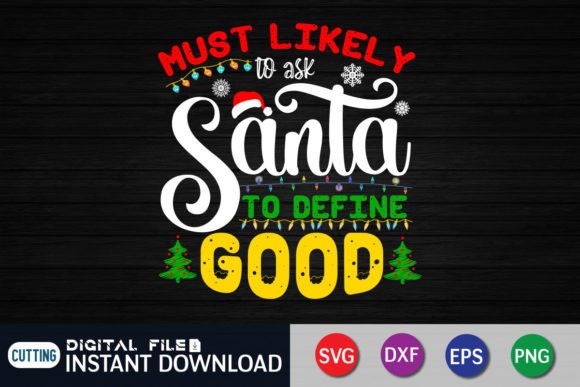
Freebies Graphics: Reviewing Most Likely to Ask Santa to Define Good
As a brand designer who has spent years refining visual identities for local businesses, I approach every new graphic design asset with a critical eye. It is not enough for a design to be cute; it must serve a strategic purpose within a broader brand identity. Recently, I downloaded a festive file titled Most Likely to Ask Santa to Define Good from a collection of Freebies and Graphics. My goal was to evaluate its potential for a real-world client project: a boutique holiday gift shop that specializes in handmade, whimsical products. Here is my professional assessment of how this asset performs in practical small business branding scenarios.
First Impressions and Brand Personality
The phrase Most Likely to Ask Santa to Define Good immediately sets a playful, slightly mischievous tone. It suggests a brand personality that is approachable, humorous, and deeply connected to the joy of the season. For a local business like a bakery or a children’s boutique, this mood is invaluable. It feels less like a corporate mandate and more like a conversation starter. The design does not scream luxury minimalism; instead, it leans into a decorative, friendly aesthetic that works beautifully for handmade business owners looking to add character to their offerings.
When I first opened the files, I looked for versatility. The asset comes as a comprehensive package, typically including vector formats like SVG and EPS, along with high-resolution PNGs. This variety is crucial for commercial design workflows. Whether you are using Cricut for physical cutouts or importing vectors into Illustrator for packaging design, having layered files ensures you can manipulate the text and elements without losing quality.
Strategic Applications in Local Business Design
The true test of any design asset is its adaptability. I evaluated Most Likely to Ask Santa to Define Good across several common touchpoints for small businesses. Here is where it shines:
- Product Packaging: This phrase works exceptionally well on hang tags or sticker seals for gift boxes. It adds a layer of narrative to the unboxing experience, making the customer smile before they even open the product.
- Social Media Graphics: In the crowded feed of Instagram or Pinterest, humor stops the scroll. Using this graphic as a hero element in a holiday campaign can boost engagement and shareability.
- Promotional Materials: Imagine this text on a flyer for a holiday market booth or as a header on a seasonal price list. It creates an immediate emotional connection, signaling that the brand is fun and festive.
- Printable Inserts: Including this graphic on thank-you cards inside shipments reinforces brand loyalty. It turns a standard transaction into a memorable interaction.
For product sellers and marketers, this asset supports stronger first impressions. It helps differentiate a generic item from a branded experience. By integrating such specific, witty phrases, you enhance visual hierarchy and guide the customer’s eye toward the emotional benefit of the purchase, not just the functional one.
Enhancing Business Presentation and Trust
Consistency is the cornerstone of professional branding. When I use assets like Most Likely to Ask Santa to Define Good, I ensure they align with the existing color palette and typography of the client. A well-executed product label or logo design element builds trust. Customers subconsciously associate high-quality, cohesive visuals with high-quality products. This graphic, when used correctly, contributes to that perception of polish and care.
Moreover, better shelf appeal is critical for brick-and-mortar local business owners. A playful graphic on a jar of jam or a box of cookies can make the product stand out against competitors who use sterile, generic labeling. It creates a stronger emotional connection, reminding shoppers that there are real people behind the brand who value joy and creativity.
Where to Use It Carefully
While versatile, this asset is not a universal solution. As a designer, I advise caution in certain contexts. Do not use Most Likely to Ask Santa to Define Good for formal corporate branding or serious industries like healthcare or finance. The playful tone would clash with the need for authority and seriousness.
Additionally, avoid placing this graphic on very small labels where legibility becomes an issue. If your packaging design is already crowded with ingredient lists, legal information, or barcodes, adding a decorative phrase can create visual noise. It should not compete with essential text. Similarly, for luxury minimalist brands that rely on stark whitespace and subtle elegance, this type of illustrative, text-heavy graphic might feel too busy or informal.
Practical Designer Notes for Implementation
Before committing to print or digital publication, I always run a series of tests. Here is my checklist for using this asset effectively:
- Test on Real Mockups: Never judge a design solely on screen. Place the SVG or PNG onto a 3D product mockup to see how it wraps around curves or sits on flat surfaces.
- Check Black and White Usage: Ensure the design holds up in monochrome. This is vital for cost-effective printing on receipts or simple stickers.
- Preview on Small Labels: Scale it down to the size of a lip balm tube or a small jar. If the details blur, simplify the usage or increase the size.
- Font Pairing: Test the graphic beside serif, sans serif, script, and handwritten fonts. Since this asset is text-based, ensure it harmonizes with your primary brand typography rather than clashing with it.
- Inspect Vector Editability: Open the EPS or SVG file in your preferred software. Confirm that the layers are intact and that you can change colors to match your brand guidelines easily.
- Verify Licensing: Even though it may be listed under Freebies, always confirm the commercial license terms. Ensure you are allowed to use it for physical product sales and client work.
In conclusion, Most Likely to Ask Santa to Define Good is a potent tool for creative entrepreneurs and boutique owners. It offers a blend of humor and festivity that can elevate marketing visuals and social media graphics. By treating it as a strategic component of your brand identity rather than just a decorative clipart, you can create more engaging, trustworthy, and memorable experiences for your customers. Whether you are designing a Canva template for email newsletters or crafting custom stickers for holiday orders, this asset proves that thoughtful digital product selection is key to successful editorial design and web design projects alike.