I Love Brother: A Designer’s Take on Embroidery Appeal
As a designer who has spent countless hours staring at digitized paths and troubleshooting thread breaks, I approach every new machine embroidery design with a mix of curiosity and skepticism. We have all been there: downloading a file that looks perfect on screen but turns into a tangled mess of bird nests on the fabric. Recently, I came across the I Love Brother design, listed under Freebies in the Graphics category. While it is marketed as a digital asset, my interest lies strictly in its potential for real-world application. Can this design hold up under the needle? Does it translate well from vector to thread? Let’s break it down from the perspective of someone who actually stitches these files for clients and personal projects.
First Impressions and Visual Personality
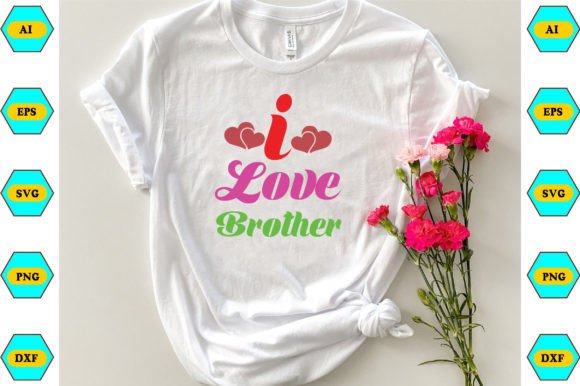
The first thing I notice about I Love Brother is its clean, straightforward aesthetic. In the world of embroidery, simplicity is often a virtue rather than a limitation. Complex gradients and tiny details rarely survive the transition to thread, especially on textured fabrics. This design appears to prioritize clarity, which is crucial for legibility on items like baby clothes or tote bags where the viewer might be standing a few feet away. The mood is warm and familial, making it an immediate candidate for personalized gifts. It doesn’t try to be overly ornate, which suggests it will stitch out cleanly without excessive density issues.
When evaluating a digital embroidery file, I always look at the balance between positive and negative space. A design that is too dense can cause fabric puckering, while one that is too sparse might look unfinished. From what I can gather from the preview, I Love Brother strikes a reasonable balance. It feels substantial enough to be a focal point on a sweatshirt but not so heavy that it would stiffen a delicate tea towel.
Real-World Application: The Tote Bag Test
To truly understand the value of a design, I imagine it on a specific product. Let’s say I am preparing a custom order for a local boutique: a set of canvas tote bags for a sibling-themed event. Canvas is a sturdy fabric, but it has a visible weave. A design with poor stitch definition will get lost in the texture. Here, I Love Brother shines because of its likely use of bold lines. If the design utilizes a combination of satin stitch for borders and fill stitch for larger areas, it should sit nicely on top of the canvas without sinking in.
For a handmade product like this, the perceived value is tied directly to the crispness of the embroidery. If the letters are clear and the spacing is even, the customer perceives high quality. If the design were to include intricate swirls or tiny serifs, I would hesitate to use it on canvas. However, the straightforward nature of this graphic suggests it is optimized for readability, which is exactly what you want for a gift item that needs to make an instant emotional connection.
Versatility Across Products
Beyond tote bags, where else does this design fit? I see strong potential in custom apparel. Imagine this embroidered on the left chest of a hoodie or the back of a baseball cap. For caps, the curved surface presents a challenge. Designs need to be narrow enough to fit within the standard hoop size without distorting. Since I Love Brother appears to have a compact layout, it could work well for headwear, provided the digitizer accounted for the pull of the fabric.
It is also a strong contender for baby embroidery. Parents love personalized items, and a soft onesie or burp cloth featuring this sentiment would be a hit. However, this requires caution. Baby skin is sensitive, so the back of the embroidery must be clean. If the design uses a lot of jump stitches or has a rough backing, it might need a soft cover stitch or a high-quality cut-away stabilizer to ensure comfort. Always test on scrap fabric first to check for scratchiness.
Technical Considerations and File Formats
One aspect that stands out in the product description is the inclusion of vector files: Ai, EPS, and SVG. This is interesting because typical machine embroidery files come in formats like PES, DST, or JEF. The presence of vector graphics suggests that I Love Brother is primarily a design asset for cutting machines like Cricut or Silhouette, or for manual digitizing.
Important Note for Embroiderers: If you are planning to use this for machine embroidery, you cannot simply load an SVG or AI file into most home embroidery machines. You will need to digitize it yourself using software like Wilcom, Hatch, or Embrilliance, or convert it using a reliable auto-digitizing tool. This gives you control over the stitch density, underlay, and thread colors. Since you get the Ai file, you can change colors easily before digitizing, allowing you to match specific brand palettes or customer requests. This flexibility is a huge plus for Etsy sellers and craft business owners who need to offer customization.
If you are not a digitizer, be aware that auto-digitizing simple text can sometimes result in poor stitch angles. I recommend manually adjusting the stitch direction to follow the flow of the letters. This ensures that the light reflects off the thread consistently, giving the finished product a professional sheen.
Fabric and Stabilizer Choices
The success of any embroidery project depends heavily on the foundation. For I Love Brother, I would recommend a medium-weight cut-away stabilizer for stretchy fabrics like t-shirts and sweatshirts. This prevents the design from distorting after washing. For woven fabrics like aprons or pillow covers, a tear-away stabilizer might suffice, but always test first.
Thread color contrast is another critical factor. On dark fabrics, ensure you use a bright, contrasting thread color to maintain legibility. On light fabrics, you have more freedom, but avoid threads that are too similar in value to the background, as the design may disappear. A quick black-and-white mockup test on your computer can save you from stitching a design that lacks visual impact.
Commercial Use and Licensing
For small shop products and commercial embroidery, licensing is non-negotiable. Since this is listed under Freebies, you must verify the specific license terms included in the zip file. Some free graphics are for personal use only, while others allow limited commercial use. Never assume. If you plan to sell finished products like embroidered patches or apparel featuring this design, confirm that the creator permits it. Protecting your business from copyright issues is just as important as the quality of your stitching.
Final Verdict
The I Love Brother design offers a solid foundation for creators looking to add a personal touch to their projects. Its strength lies in its simplicity and versatility. Whether you are digitizing it for a high-end commercial embroidery job or using the SVG for a vinyl heat transfer, the clean lines provide a reliable starting point. Just remember to respect the technical requirements of your chosen medium. Test your tension, choose the right stabilizer, and always prioritize the comfort and durability of the final item. With careful execution, this design can become a staple in your library of go-to assets for family-themed merchandise.