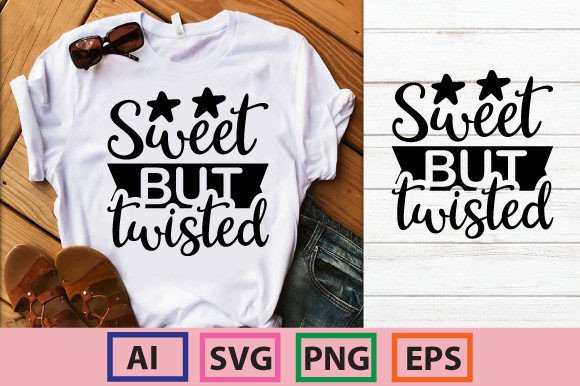
Sweet but Twisted: A Designer’s Practical Review
As a designer who has spent countless hours staring at digitizing software and even more time watching needles punch through fabric, I have learned to be skeptical of new assets. We all love a good Freebies drop, but the real question is always the same: will this actually work in a real-world embroidery project? I recently downloaded Sweet but Twisted, a set of Graphics files, to see if it holds up under the scrutiny of professional production. This isn’t just about whether the lines look pretty on a screen; it is about how the design behaves when translated into thread.
First Impressions and Visual Personality
When I first opened the zip file, I was pleased to see a comprehensive suite of formats. Having access to SVG, AI, EPS, PNG, DXF, and JPG files means this asset is versatile. While my primary focus is stitching, having vector files like AI and EPS allows me to inspect the original paths before any conversion or digitizing takes place. The title Sweet but Twisted suggests a playful juxtaposition, and visually, the design delivers on that promise. It has a whimsical yet edgy vibe that feels current.
The layout is balanced, which is crucial for embroidery. Asymmetrical designs can sometimes cause hoop distortion if one side is significantly denser than the other, but this piece appears to have a thoughtful distribution of visual weight. For a machine embroidery design, this balance is the first indicator of quality. It doesn’t scream for attention with chaotic details; instead, it invites a closer look. This makes it ideal for projects where you want the design to be a conversation starter without overwhelming the garment.
Real-World Application: The Tote Bag Test
To truly evaluate Sweet but Twisted, I imagined a specific client request: a custom tote bag design for a local boutique selling artisanal goods. The client wanted something that felt handmade but polished. I visualized placing this graphic on a heavy canvas tote. Because the design likely contains both open spaces and detailed areas, it would require careful consideration of stitch density.
If I were digitizing this from the provided SVG or using it as a reference for an applique design, I would lean towards a combination of satin stitch for the outlines and a light fill stitch for any larger solid areas. On a textured canvas, a dense fill can look muddy, so keeping the stitch count moderate is key. The "twisted" elements of the design would pop nicely against the rough weave of the fabric, creating a tactile contrast that customers love in a handmade product.
Versatility Across Product Lines
Beyond tote bags, this design has strong potential for custom apparel. Imagine it embroidered on the chest of a oversized sweatshirt embroidery piece. The playful nature of the graphic fits well with the casual, cozy aesthetic of fleece or cotton blends. However, because sweatshirts are stretchy, I would advise using a cut-away stabilizer to prevent the stitches from puckering over time. The design’s scale seems appropriate for a left-chest placement, where it acts as a subtle brand marker rather than a loud statement.
For Etsy seller audiences, this asset could be a cornerstone for a line of personalized gift items. It works beautifully on baby embroidery projects, such as bibs or onesies, provided you simplify the tiniest details. Babies move, and their clothes go through rigorous washing cycles. If the design has extremely fine running stitch details, they might get lost or break after several washes. I recommend testing the smallest elements on scrap fabric to ensure they hold up.
Navigating Technical Challenges
While Sweet but Twisted is visually appealing, there are areas where caution is necessary. Any design with "twisted" or intricate lines can be tricky on curved surfaces like caps. If you plan to use this for an embroidered patch or directly on a hat, you must check the hoop size limitations. A 4x4 hoop might crop essential parts of the design, so a 5x7 or larger hoop would be safer to maintain the integrity of the artwork.
Another consideration is fabric texture. On thin or slippery fabrics like silk or rayon, the pull of the threads can distort the design. In these cases, using a water-soluble topping can help keep the stitches on the surface and prevent them from sinking into the nap of the fabric. This is especially important if you are aiming for a high-end finished product that needs to look pristine in a boutique setting.
Commercial Viability and Branding
For craft business owners, the value of a design lies in its ability to enhance brand consistency. Sweet but Twisted has a distinct personality that can help define a shop’s aesthetic. Whether you are creating holiday embroidery gifts or everyday wear, the design adds a layer of professionalism. It doesn’t look like a generic clip-art insertion; it feels curated.
However, before listing items on your small shop product page, you must verify the licensing terms. Since this comes as a bundle of digital embroidery file formats and vectors, ensure that commercial use is permitted for the final stitched items. Many designers allow you to sell the physical commercial embroidery products but restrict the resale of the digital files themselves. Always read the fine print to protect your business.
Practical Designer Notes
Before you commit to a full production run, follow these steps:
- Test on Scrap Fabric: Always stitch out a test sample on the same type of fabric you intend to use for the final product. This reveals issues with tension and density.
- Check Thread Contrast: View the design in black and white. If the details disappear in grayscale, they will likely get lost in low-light conditions or on busy patterns.
- Review Stitch Density: If you are digitizing this yourself from the SVG, avoid overlapping stitches which can cause thread breaks and needle damage.
- Confirm Hoop Size: Measure the design dimensions against your machine’s maximum hoop capacity.
- Inspect Small Details: Zoom in on the AI or EPS files to see if any lines are too thin to be effectively stitched or cut.
In conclusion, Sweet but Twisted is a promising addition to your library of design assets. It offers the flexibility needed for various applications, from printable mockup previews to actual stitched goods. With proper preparation and attention to technical details, it can elevate your custom apparel and home decor offerings. It is a reminder that even free resources can deliver professional results when handled with an experienced eye.